
These murder mystery riddles focus on clean deduction rather than graphic detail. Each case turns on an impossible alibi, staged scene, selective poison, timeline conflict, unreliable witness, or trace clue.
Assume the stated records and verified alibis are accurate, then look for the one detail that cannot fit. The immediate answers explain the culprit or decisive evidence without asking readers to guess beyond the clues.

Impossible Alibis
Take each clue on its own terms and listen for the small detail that rules out tempting alternatives. A fair answer should make every important word click into place.
- During a citywide blackout, the butler said he watched a live television broadcast while the cook and maid had verified alibis. Who must be lying?
Answer: The butler. - The victim was found inside after fresh snow covered the yard. The neighbor claimed to have walked to the back door, but no tracks crossed the snow. Who gave the false alibi?
Answer: The neighbor. - Rain poured all evening. The gardener said he spent the murder hour watering the outdoor flower beds, while every other alibi was confirmed. Who is the suspect?
Answer: The gardener. - The elevator was officially locked for repairs all day. One suspect said she rode it to the top floor at noon, and every other account was verified. Who lied?
Answer: The elevator suspect. - The study was pitch-dark after its only bulb shattered. A suspect claimed he entered and immediately read a handwritten note across the room. Who is exposed by the claim?
Answer: The note reader. - The cabin's landline had been disconnected for a week. One guest said he spent the critical minute making a call on that phone. Who gave the impossible story?
Answer: The guest who claimed the call. - The suspect said she had just driven home, but the car engine was completely cold and a verified camera showed no arrival. What undermines her alibi?
Answer: The cold engine. - Heavy rain began before the crime. A visitor claimed to have walked several blocks to the house, yet his coat and umbrella were perfectly dry. Who is the likely liar?
Answer: The dry visitor. - The only stairway was coated with wet paint that showed every touch. A suspect claimed she climbed it, but the surface was unmarked. What disproves her story?
Answer: The untouched paint. - The office printer was unplugged and had no battery. One employee claimed it printed his alibi receipt during the outage. Which clue exposes him?
Answer: The unplugged printer. - What decisive clue solves this case: During a citywide blackout, the butler said he watched a live television broadcast while the cook and maid had verified alibis. Who must be lying?
Answer: The television could not show a live broadcast without power. - What decisive clue solves this case: The victim was found inside after fresh snow covered the yard. The neighbor claimed to have walked to the back door, but no tracks crossed the snow. Who gave the false alibi?
Answer: A real walk to the back door would have left tracks in the untouched snow. - What decisive clue solves this case: Rain poured all evening. The gardener said he spent the murder hour watering the outdoor flower beds, while every other alibi was confirmed. Who is the suspect?
Answer: Watering outdoor beds during a downpour is the impossible alibi. - What decisive clue solves this case: The elevator was officially locked for repairs all day. One suspect said she rode it to the top floor at noon, and every other account was verified. Who lied?
Answer: A locked, out-of-service elevator could not carry her upstairs. - What decisive clue solves this case: The study was pitch-dark after its only bulb shattered. A suspect claimed he entered and immediately read a handwritten note across the room. Who is exposed by the claim?
Answer: He could not read handwriting across a completely dark room. - What decisive clue solves this case: The cabin's landline had been disconnected for a week. One guest said he spent the critical minute making a call on that phone. Who gave the impossible story?
Answer: A disconnected landline could not place the call. - What decisive clue solves this case: The suspect said she had just driven home, but the car engine was completely cold and a verified camera showed no arrival. What undermines her alibi?
Answer: A car used moments earlier would normally retain noticeable warmth. - What decisive clue solves this case: Heavy rain began before the crime. A visitor claimed to have walked several blocks to the house, yet his coat and umbrella were perfectly dry. Who is the likely liar?
Answer: Walking through the ongoing rain would have wet him or his umbrella. - What decisive clue solves this case: The only stairway was coated with wet paint that showed every touch. A suspect claimed she climbed it, but the surface was unmarked. What disproves her story?
Answer: Using the wet-painted stairs would have disturbed the coating. - What decisive clue solves this case: The office printer was unplugged and had no battery. One employee claimed it printed his alibi receipt during the outage. Which clue exposes him?
Answer: An unplugged printer without backup power could not print.
Staged Crime Scenes
Take each clue on its own terms and listen for the small detail that rules out tempting alternatives. A fair answer should make every important word click into place.
- The shop's front bell was removed that morning. A witness said she heard it ring when the killer entered. Which statement cannot be true?
Answer: The witness's bell story. - The clock tower had been silent for repairs all week. A suspect said its noon chime told him when to leave. Who supplied the impossible time cue?
Answer: The suspect who cited the chime. - The security door accepted only active badges. One worker's badge had been canceled before the crime, yet he claimed he used it that night. What gives him away?
Answer: The canceled badge. - The roof was reachable only by a ladder stored under police seal. A suspect claimed he spent the evening on the roof, but the seal was intact. Why does the alibi fail?
Answer: The sealed ladder. - The lake had been frozen solid for days. A guest said he rowed across it during the murder hour. Who is lying?
Answer: The guest who claimed to row. - The ferry made no trips because the river was closed. One suspect said he arrived on the 8 p.m. ferry. Which alibi is impossible?
Answer: The ferry alibi. - The museum's west door was bricked shut months earlier. A guard said he saw the killer escape through it. What flaw solves the contradiction?
Answer: The sealed west door. - The victim's office had no window, skylight, or glass door. A suspect said moonlight let him see inside. Which detail proves the account false?
Answer: The windowless office. - The restaurant's gas had been shut off all day and its electric appliances were removed. The chef claimed he cooked soup there at midnight. Who lied?
Answer: The chef. - The only bridge washed out before sunset. A visitor claimed to drive across it at midnight, and no alternate route existed. What breaks the alibi?
Answer: The missing bridge. - What decisive clue solves this case: The shop's front bell was removed that morning. A witness said she heard it ring when the killer entered. Which statement cannot be true?
Answer: There was no bell installed to make the sound. - What decisive clue solves this case: The clock tower had been silent for repairs all week. A suspect said its noon chime told him when to leave. Who supplied the impossible time cue?
Answer: The repaired clock was not chiming. - What decisive clue solves this case: The security door accepted only active badges. One worker's badge had been canceled before the crime, yet he claimed he used it that night. What gives him away?
Answer: A canceled credential could not unlock the door. - What decisive clue solves this case: The roof was reachable only by a ladder stored under police seal. A suspect claimed he spent the evening on the roof, but the seal was intact. Why does the alibi fail?
Answer: The only access ladder had not been removed from its seal. - What decisive clue solves this case: The lake had been frozen solid for days. A guest said he rowed across it during the murder hour. Who is lying?
Answer: A rowboat cannot cross solid ice. - What decisive clue solves this case: The ferry made no trips because the river was closed. One suspect said he arrived on the 8 p.m. ferry. Which alibi is impossible?
Answer: No ferry operated on the closed river. - What decisive clue solves this case: The museum's west door was bricked shut months earlier. A guard said he saw the killer escape through it. What flaw solves the contradiction?
Answer: Nobody could pass through a bricked-up doorway. - What decisive clue solves this case: The victim's office had no window, skylight, or glass door. A suspect said moonlight let him see inside. Which detail proves the account false?
Answer: Moonlight had no opening through which to enter. - What decisive clue solves this case: The restaurant's gas had been shut off all day and its electric appliances were removed. The chef claimed he cooked soup there at midnight. Who lied?
Answer: The kitchen had no working heat source. - What decisive clue solves this case: The only bridge washed out before sunset. A visitor claimed to drive across it at midnight, and no alternate route existed. What breaks the alibi?
Answer: A car could not cross a bridge that was no longer there.

Poison and Personal Items
Take each clue on its own terms and listen for the small detail that rules out tempting alternatives. A fair answer should make every important word click into place.
- A recorded message said, “I cannot go on,” and the cassette was already rewound to the beginning beside the victim. Why did the detective suspect murder?
Answer: The tape had been rewound. - The victim was left-handed, but a weapon had been carefully placed in the right hand to suggest suicide. What detail signals a staged scene?
Answer: The wrong hand. - A window appeared smashed from outside, yet nearly all glass fragments lay on the lawn. What did the detective infer?
Answer: The window was broken from inside. - The safe was coated in undisturbed dust, though a suspect claimed to open it during the crime. Which clue defeats that claim?
Answer: The undisturbed dust. - A wet floor preserved clear shoeprints from everyone who crossed it. One suspect claimed to enter, but no print matched that person's shoes. What matters most?
Answer: The missing shoeprints. - The room door was locked, but soot in the fireplace was freshly disturbed and the chimney opened to the roof. What overlooked route explains the mystery?
Answer: The chimney. - The victim's final calendar page named a meeting on February 30. Why did the detective treat it as a planted note?
Answer: The impossible date. - A suspect produced a photo supposedly taken in a dark basement, but the camera had no flash and the basement had no light. What makes the photo alibi fail?
Answer: The lack of any light source. - A freshly waxed hallway reflected every footprint. The suspect claimed to run through it, but the wax was flawless. Which evidence contradicts the claim?
Answer: The flawless wax. - The apartment intercom had been removed, yet a resident claimed the victim buzzed her in. What is the decisive contradiction?
Answer: The missing intercom. - What decisive clue solves this case: A recorded message said, “I cannot go on,” and the cassette was already rewound to the beginning beside the victim. Why did the detective suspect murder?
Answer: The victim could not rewind the tape after the final recorded words. - What decisive clue solves this case: The victim was left-handed, but a weapon had been carefully placed in the right hand to suggest suicide. What detail signals a staged scene?
Answer: The placement conflicted with the victim's established dominant hand. - What decisive clue solves this case: A window appeared smashed from outside, yet nearly all glass fragments lay on the lawn. What did the detective infer?
Answer: Glass generally travels away from the side receiving the blow. - What decisive clue solves this case: The safe was coated in undisturbed dust, though a suspect claimed to open it during the crime. Which clue defeats that claim?
Answer: Opening the safe would have marked the dusty handle or door. - What decisive clue solves this case: A wet floor preserved clear shoeprints from everyone who crossed it. One suspect claimed to enter, but no print matched that person's shoes. What matters most?
Answer: Crossing the wet floor should have left a matching trail. - What decisive clue solves this case: The room door was locked, but soot in the fireplace was freshly disturbed and the chimney opened to the roof. What overlooked route explains the mystery?
Answer: The disturbed chimney provided another way in or out. - What decisive clue solves this case: The victim's final calendar page named a meeting on February 30. Why did the detective treat it as a planted note?
Answer: February never has a thirtieth day. - What decisive clue solves this case: A suspect produced a photo supposedly taken in a dark basement, but the camera had no flash and the basement had no light. What makes the photo alibi fail?
Answer: A normal camera cannot record a visible scene in total darkness without light. - What decisive clue solves this case: A freshly waxed hallway reflected every footprint. The suspect claimed to run through it, but the wax was flawless. Which evidence contradicts the claim?
Answer: Running through fresh wax would leave marks. - What decisive clue solves this case: The apartment intercom had been removed, yet a resident claimed the victim buzzed her in. What is the decisive contradiction?
Answer: The victim could not use equipment that was no longer installed.
Timeline Contradictions
Take each clue on its own terms and listen for the small detail that rules out tempting alternatives. A fair answer should make every important word click into place.
- Four people drank the same punch, but only the victim slowly sipped from a glass whose ice contained poison. How did the poison reach only the victim?
Answer: The poison was in the ice. - Everyone ate the same cake, but only the victim used a knife coated on one side with poison. How was one slice contaminated?
Answer: The poisoned knife side. - All guests shared one bottle, but poison was found only on the victim's glass rim. Where had it been placed?
Answer: On the rim. - The victim alone added sugar from a personal packet that had been resealed. What item carried the poison?
Answer: The sugar packet. - Five diners ate identical soup, but the victim alone sprinkled a tainted garnish from a reserved bowl. What delivered the poison?
Answer: The garnish. - Everyone drank hot tea from the same pot, but the victim's honey spoon was coated with poison. What was the delivery method?
Answer: The honey spoon. - The victim alone chewed a piece from a gift box whose other pieces were harmless; one wrapper was marked subtly underneath. How was the target selected?
Answer: The marked wrapper. - All campers ate stew, but only the victim used a canteen later found contaminated. Which container was the source?
Answer: The canteen. - Four actors wore stage makeup, but the victim's personal lipstick contained poison. Which item explains the selective harm?
Answer: The lipstick. - The victim alone took a capsule from a bottle whose seal had been replaced. What evidence points to tampering?
Answer: The replaced seal. - What decisive clue solves this case: Four people drank the same punch, but only the victim slowly sipped from a glass whose ice contained poison. How did the poison reach only the victim?
Answer: Slow melting released poison into the victim's drink. - What decisive clue solves this case: Everyone ate the same cake, but only the victim used a knife coated on one side with poison. How was one slice contaminated?
Answer: Only the slice touching the coated side received the poison. - What decisive clue solves this case: All guests shared one bottle, but poison was found only on the victim's glass rim. Where had it been placed?
Answer: Contact with the victim's rim delivered poison without contaminating the bottle. - What decisive clue solves this case: The victim alone added sugar from a personal packet that had been resealed. What item carried the poison?
Answer: The individual packet isolated the poisoned ingredient. - What decisive clue solves this case: Five diners ate identical soup, but the victim alone sprinkled a tainted garnish from a reserved bowl. What delivered the poison?
Answer: Only the victim used the contaminated topping. - What decisive clue solves this case: Everyone drank hot tea from the same pot, but the victim's honey spoon was coated with poison. What was the delivery method?
Answer: The shared tea was safe until the victim used the coated spoon. - What decisive clue solves this case: The victim alone chewed a piece from a gift box whose other pieces were harmless; one wrapper was marked subtly underneath. How was the target selected?
Answer: The killer identified one prepared piece by its hidden mark. - What decisive clue solves this case: All campers ate stew, but only the victim used a canteen later found contaminated. Which container was the source?
Answer: The shared meal was not the unique exposure. - What decisive clue solves this case: Four actors wore stage makeup, but the victim's personal lipstick contained poison. Which item explains the selective harm?
Answer: Only the victim used that personal cosmetic. - What decisive clue solves this case: The victim alone took a capsule from a bottle whose seal had been replaced. What evidence points to tampering?
Answer: A false seal allowed one dose to be altered while appearing unopened.
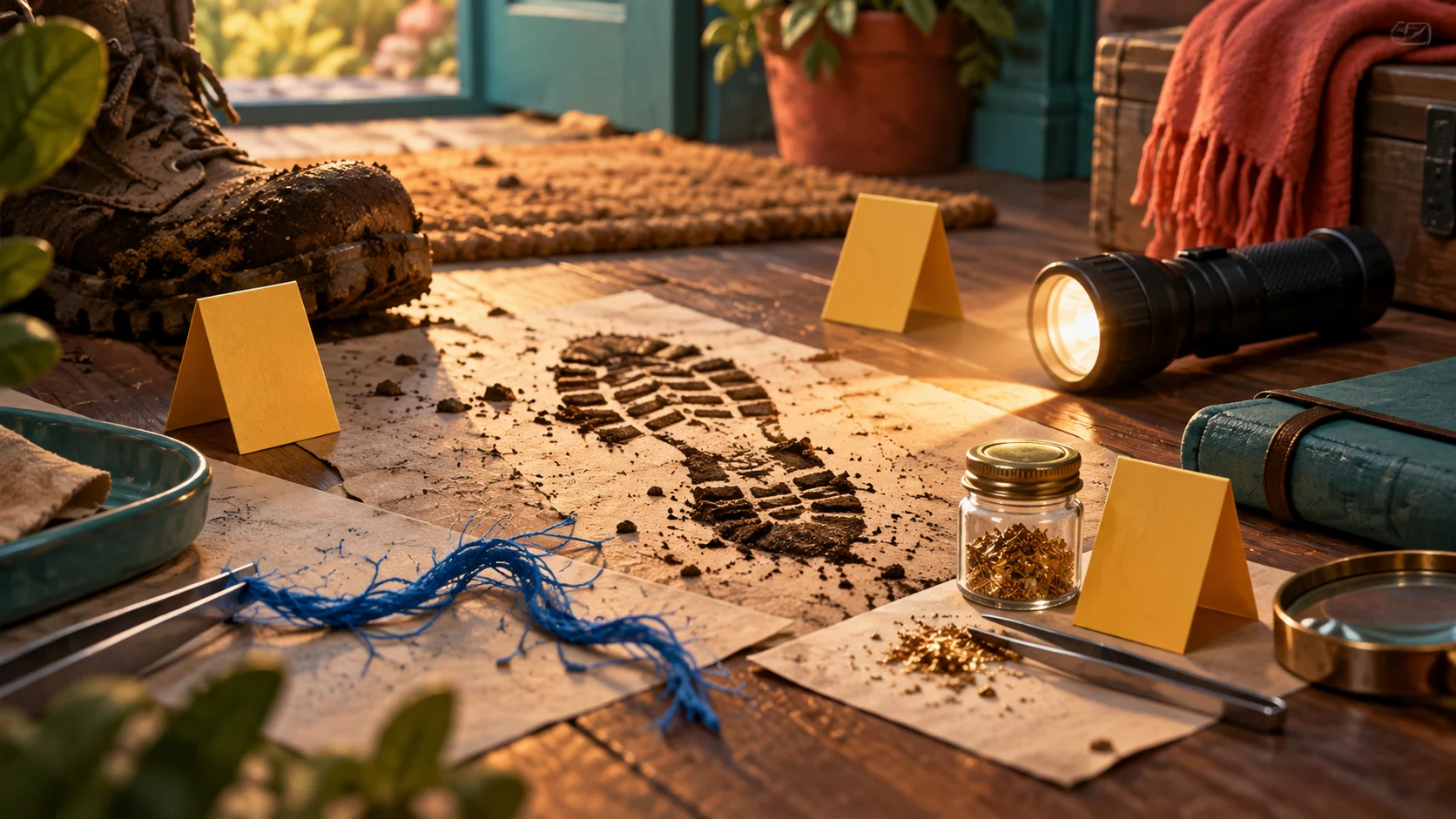
Witness and Writing Clues
Take each clue on its own terms and listen for the small detail that rules out tempting alternatives. A fair answer should make every important word click into place.
- At 8:00 a witness saw the victim alive. A stopped watch read 7:30, so a suspect insisted death occurred then. Why is that conclusion invalid?
Answer: A stopped watch is not a reliable death clock. - A suspect said the victim called at 9:00, but verified phone records show no outgoing or incoming call. Which evidence outweighs the story?
Answer: The phone records. - The train arrived at 10:15, but a suspect's ticket was scanned at another station at 10:12 too far away to reach the scene. What establishes the alibi?
Answer: The time-stamped scan. - A lobby camera shows a suspect entering at 6:00 and never leaving before 8:00. The crime occurred miles away at 7:00. What clears the suspect?
Answer: The continuous camera record. - The murder occurred before a storm began at 9:00. A suspect described lightning illuminating the scene at 8:30. What makes the account suspicious?
Answer: The storm had not begun. - The victim sent a verified message at 4:05, but a suspect claimed to discover the body at 4:00. What contradiction matters?
Answer: The message came later than the claimed discovery. - A parking receipt places one suspect across town three minutes before the crime, and the drive takes at least forty minutes. What does the receipt provide?
Answer: A verified distant timestamp. - The kitchen timer beeped at 7:20, but a suspect claimed it marked midnight. Why should detectives reject that time claim?
Answer: The timer does not show clock time. - The wall clock ran twenty minutes slow, a fact verified before the crime. It showed 8:10 when police entered. What was the actual time?
Answer: 8:30. - A suspect's smartwatch recorded a continuous run ten miles away during the crime, and independent cameras confirm the route. What forms the strong alibi?
Answer: The matched watch and camera data. - What decisive clue solves this case: At 8:00 a witness saw the victim alive. A stopped watch read 7:30, so a suspect insisted death occurred then. Why is that conclusion invalid?
Answer: A watch can stop before or after the crime for unrelated reasons. - What decisive clue solves this case: A suspect said the victim called at 9:00, but verified phone records show no outgoing or incoming call. Which evidence outweighs the story?
Answer: The complete call log contradicts the claimed call. - What decisive clue solves this case: The train arrived at 10:15, but a suspect's ticket was scanned at another station at 10:12 too far away to reach the scene. What establishes the alibi?
Answer: The verified location makes timely travel impossible. - What decisive clue solves this case: A lobby camera shows a suspect entering at 6:00 and never leaving before 8:00. The crime occurred miles away at 7:00. What clears the suspect?
Answer: It places the suspect elsewhere throughout the crime window. - What decisive clue solves this case: The murder occurred before a storm began at 9:00. A suspect described lightning illuminating the scene at 8:30. What makes the account suspicious?
Answer: The described lightning did not exist at the claimed time. - What decisive clue solves this case: The victim sent a verified message at 4:05, but a suspect claimed to discover the body at 4:00. What contradiction matters?
Answer: The victim was demonstrably alive five minutes after the stated discovery. - What decisive clue solves this case: A parking receipt places one suspect across town three minutes before the crime, and the drive takes at least forty minutes. What does the receipt provide?
Answer: The travel time rules out arrival at the scene. - What decisive clue solves this case: The kitchen timer beeped at 7:20, but a suspect claimed it marked midnight. Why should detectives reject that time claim?
Answer: A countdown alarm reveals elapsed duration, not the hour. - What decisive clue solves this case: The wall clock ran twenty minutes slow, a fact verified before the crime. It showed 8:10 when police entered. What was the actual time?
Answer: Adding the known twenty-minute delay gives the real time. - What decisive clue solves this case: A suspect's smartwatch recorded a continuous run ten miles away during the crime, and independent cameras confirm the route. What forms the strong alibi?
Answer: Independent location evidence confirms the same activity.
Trace Evidence and Final Cases
Take each clue on its own terms and listen for the small detail that rules out tempting alternatives. A fair answer should make every important word click into place.
- The victim's scheduled email was sent after death. Why does the send time alone not identify a living sender?
Answer: The email was automated. - A frozen clock shattered during the crime and stopped at 2:00, but witnesses heard it strike three earlier. Which evidence is more direct for the break time?
Answer: The shattered clock hands. - Two suspects give identical stories word for word, including the same unusual mistake. Why might detectives suspect coordination?
Answer: The shared unusual error. - A witness claims to recognize a masked killer solely by eye color from fifty yards away at night. What is weak about the identification?
Answer: The viewing conditions. - The anonymous note uses a rare misspelling also found throughout one suspect's verified diary. What clue links the writer?
Answer: The repeated rare misspelling. - A muddy bootprint has a triangular missing tread block. One suspect's boot has the same fresh gap and matching size. What connects the shoe to the scene?
Answer: The distinctive tread defect. - A torn blue fiber on a window matches a fresh tear in one suspect's blue coat. What makes the comparison useful?
Answer: The matching tear and fiber. - The scene contains red soil found only along one closed quarry road. A suspect's tires carry the same soil despite denying the trip. What challenges the denial?
Answer: The location-specific soil. - A key copy has fresh brass filings, while one suspect owns the only verified blank and file set. What evidence suggests unauthorized duplication?
Answer: The fresh filings and matching tools. - The killer left a size-ten print, but the accused wears size seven and camera footage shows no shoe change. What does the print do?
Answer: It excludes the accused as the wearer. - What decisive clue solves this case: The victim's scheduled email was sent after death. Why does the send time alone not identify a living sender?
Answer: Scheduled messages can be delivered without someone present. - What decisive clue solves this case: A frozen clock shattered during the crime and stopped at 2:00, but witnesses heard it strike three earlier. Which evidence is more direct for the break time?
Answer: The physical stop records the impact more closely than memory of a chime. - What decisive clue solves this case: Two suspects give identical stories word for word, including the same unusual mistake. Why might detectives suspect coordination?
Answer: Independent truthful memories rarely match in every odd detail. - What decisive clue solves this case: A witness claims to recognize a masked killer solely by eye color from fifty yards away at night. What is weak about the identification?
Answer: Distance, darkness, and a mask make that detail unreliable. - What decisive clue solves this case: The anonymous note uses a rare misspelling also found throughout one suspect's verified diary. What clue links the writer?
Answer: An unusual habitual error can connect both texts. - What decisive clue solves this case: A muddy bootprint has a triangular missing tread block. One suspect's boot has the same fresh gap and matching size. What connects the shoe to the scene?
Answer: Size plus the unusual missing block makes the match specific. - What decisive clue solves this case: A torn blue fiber on a window matches a fresh tear in one suspect's blue coat. What makes the comparison useful?
Answer: The fiber fits a newly damaged source garment. - What decisive clue solves this case: The scene contains red soil found only along one closed quarry road. A suspect's tires carry the same soil despite denying the trip. What challenges the denial?
Answer: The tires connect the vehicle to the quarry road. - What decisive clue solves this case: A key copy has fresh brass filings, while one suspect owns the only verified blank and file set. What evidence suggests unauthorized duplication?
Answer: They show a key was recently shaped with that equipment. - What decisive clue solves this case: The killer left a size-ten print, but the accused wears size seven and camera footage shows no shoe change. What does the print do?
Answer: The verified size mismatch cannot fit the accused's shoe.
How to Use These Murder Mystery Riddles
For a casual game, read each clue twice and give players ten seconds before showing the answer. In teams, award one point for the answer and a second point for a clear explanation of how the clues support it.
Adjust the pace rather than changing the answer. A category hint, first-letter hint, or choice between two possibilities can keep the game moving without spoiling the fun.
Finish With a Create-Your-Own Riddle Challenge
Ask each player to choose an answer, write two accurate clues, and remove any wording that gives the answer away. Trade the new riddles, solve them, and vote for the clue set that felt fairest after the reveal.
The best ending is not the hardest stump. It is the moment when a solver smiles because the answer was hiding in plain sight all along.

As owner of Fun Riddles, Ellie curates and tests the web’s most accessible riddles, brain teasers, and lateral-thinking puzzles, organized by difficulty with hints and answers educators can trust.